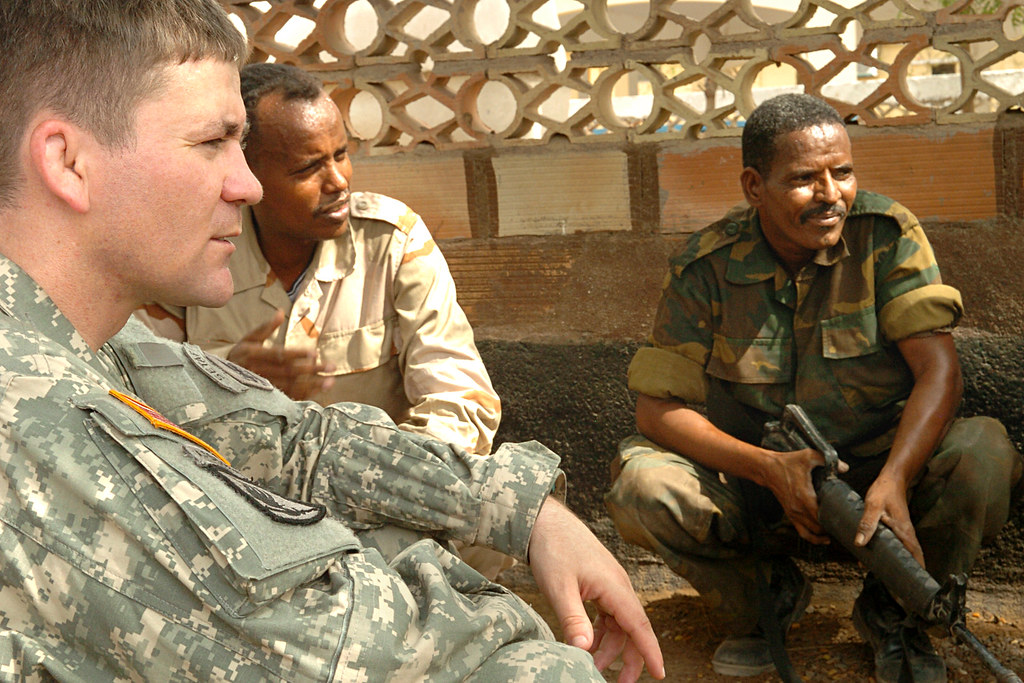
Debates over a ‘new scramble’ for Africa—or even, some suggest, a new Cold War with Africa as its crux (Kohler 2019)—show that neoliberal international relations and development discourses still tend to frame Africa as a passive, faceless site of value extraction—half sandbox for testing geopolitical boundaries and governance strategies, half frontier for extractive activities. This reduction to a mere theatre signals frustration and confusion from Western official development assistance (henceforth ODA) donors, as decades of significant spending seem to result in chronic inefficiency and widespread failure relative to their stated goals.
How, then, has neoliberal development support (henceforth, NDS)— encompassing ODA, trade agreements and corporate investment—affected social development in African recipient states?
This question is best limited to the post-Cold War period, when the core focus of Western development support shifted from anti-Soviet geostrategic chess to championing socio-economic development based on and hoped to be capable of enhancing transnational neoliberal frameworks.
Of course, different African actors have been impacted in a myriad ways by NDS. In this post, I am going to outline what I’ve identified as some of the most structurally significant forms of social impact caused by NDS that are observable across the continent. Such phenomena illustrate broader patterns in the effects of NDS, so I introduce some general themes through them, inviting you to consider broader implications in your own ways.
My key contention is that while some tangible improvements can be observed, they tend to belie deep dysfunction, being embedded in a toxic neoliberal ‘package’—which has itself caused or exacerbated numerous issues.
Indeed, neoliberal governance’s essential compulsion to dominate hosts by hollowing out their existing dynamics leads it to destroy processes and agents seeking to exist in ways that do not serve market integration or profit generation, defeating the apparent strength of very visible, and equally superficial positive changes—especially if these improvements were required because of (neo)liberal intervention in the first place.
This observation limits the possibility of making concessions as to positive impacts if the latter are examined from any perspective other than short-term performance based on narrow indicators assuming the desirability of neoliberal governance.
In this post, I rely on elements of biopolitical and feminist perspectives on NDS frameworks because they’re particularly well suited to interrogate bio-social and developmental processes/constructs, as well as the shift towards ‘human’ development in neoliberal governance. These perspectives aptly acknowledge financialised liberalism’s need to take over ‘entire states and societies…, installing markets, commodifying anything it can…, monetizing the value of everything, … generating displacement, homelessness and deprivation’ (Mezzedra et al. 2014) in order to thrive—increasingly blurring public/private divides in the process.
PRIORITY OF DONORS’ AGENDAS
Technical assistance (henceforth TA) provided as part of NDS schemes has allowed some African states to further their own objectives in terms of managing populations’ lives and their environments. For instance, Tanzania requested and easily received generous funding to attend the 1992 Rio Earth Summit, allowing it to engage with the international community. However, from the mid-1990s, once the global sustainability agenda has gained public visibility, donors made related contributions contingent upon compliance with donors’ now-heightened ecological standards, eroding Tanzania’s and others’ agency in the matter. Civil servants describe (Koch and Weingart 2016, 292) the impact of shifts in donors’ agendas triggering and then condemning projects that could significant impact biopolitical issues, leaving these initiatives in limbo and pressuring Tanzanian officials into focusing on achieving visible results rather than on solid, long-term results that may remain invisible for a while, or difficult to measure through reductive box-ticking exercises.
Gibson (2009) highlights the fact that 80% of child malnourishment occurs where structural adjustment programmes (henceforth SAPs) and TA have led to a switch from subsistence to export agriculture. Likewise, the introduction of SAPs, by stripping African health institutions of funds precisely when the HIV virus reached critical momentum, prevented public healthcare providers’ ability to limit contagion (O’Manique 1996).
While NDS donors could choose to fund, at lower cost than pharmaceutical research in Western countries, drug research in Africa (Pollock 2014), allowing intellectual property to remain where affordable drugs are desperately needed, they stand to gain more profit and control by allowing this research and its value to remain with transnational companies headquartered in the West. Millions of HIV-positive Africans depend on the continued provision of antiretroviral drugs by donors to survive.
Illicit financial flows also undermine social improvements—in highly gendered ways—and could largely be halted should the will exist among NDS donors, especially regarding trade mispricing and tax evasion. Lost tax revenues preclude many African governments from financing ‘basic public services such as maternal care, education, sexual and reproductive health, social protection, etc. [It] is women who subsidise these tasks and go unpaid for them’ (FEMNET 2017). Corporate actors and NDS providers stand to lose significant income if these activities are stopped, which reveals a clear priority ranking in their NDS ethos.
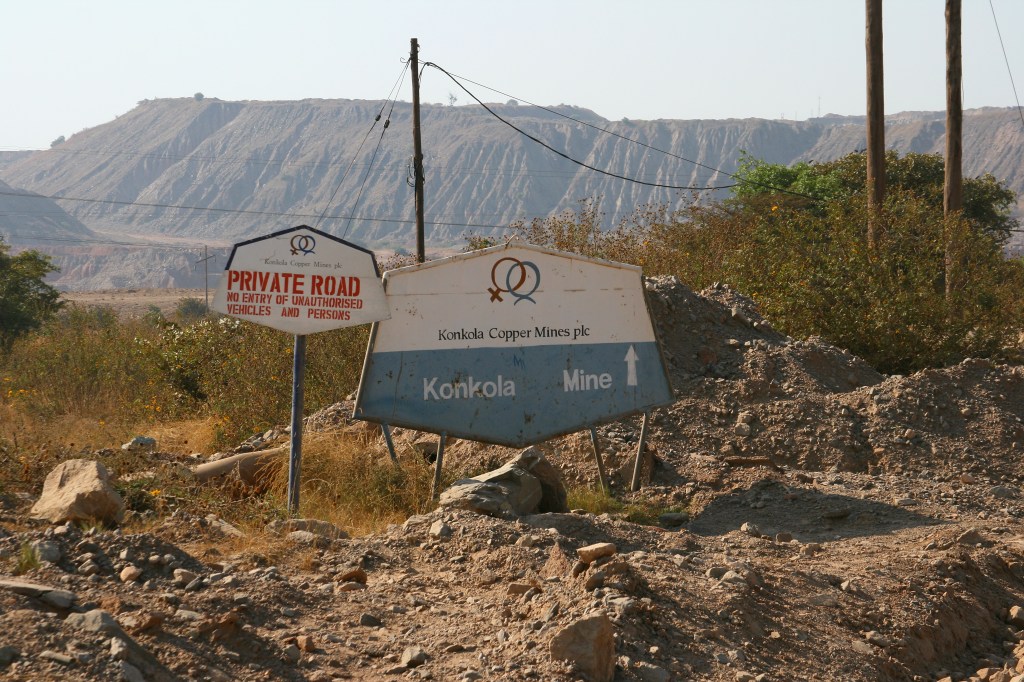
These priorities are also obvious in relation to Western donor states, financial institutions and corporations’ security discourse. In practical terms, some positive effects can be observed, e.g. in NDS resources earmarked to prevent civil conflicts triggered by effects of exogenous economic shocks. In Zambia, Savun and Tirone (2012) describe the loss of 1,720 mining jobs cut following a collapse in copper prices, jeopardising a staggering 90% of 180,000 local residents supported by these jobs, and highlight the success of NDS in mitigating the impact of these redundancies. This, however, merely points to the rocky foundations (precarity and lack of diversity of the economy shaped by SAPs and NDS intervention) and the ‘band-aid’ approach provided to NDS recipients. It doesn’t take complicated thought experiments to realise that with well-designed, holistic, effective support strategies, this kind of exposure of people to grave socio-economic dangers could be minimised.
SOCIAL DEVELOPMENT OR MARKET LOGIC DEVELOPMENT?
Harrison identifies the pernicious nature of NDS providers such as the World Bank envisioning ‘the state as a market-complementing institution’, and even as a precursor to the market, a capacity-building structure that will ‘retreat gracefully’ (Harrison 2005) once private actors can take over, filling in the hollowed-out space inside the infrastructural exoskeleton to be left behind once the state has duly solidified the frameworks of market dynamics around the organs of healthcare, education, social support provision etc. This entails switching to paying-consumer models, and shifts the focus from human well-being to profit generation, which means the core activity of these sectors—supporting life—becomes a secondary aim.
NGOs and corporations overtly found their development discourses on the prioritisation of economic development. This is hopefully done under the assumption that individuals will eventually gain the material means to pursue lives not merely free from hunger, disease, abuse or conflict, but which can fulfil them in whatever ways may satisfy them.
Here’s an example of this focus on economic ramping-up.
The Nike Foundation’s ‘The Girl Effect’ organisation claims that teenage girls have the potential to end poverty for themselves and for the world. The organisation’s initial campaign depicted as a girl’s life as a ‘picture’ the viewer should ‘pretend [they] can fix. Now she has a chance. Let’s put her in a school uniform, see her get her a loan […] and use the profits […] to help’, become a business owner and thereby earn local men’s respect and a place in the political forum. This linear story of how liberal governance could save Africa if only actors paid heed to the World’s Bank Berg report and implemented neoliberal approaches well enough (Kalu 2018) continues, through ‘commerce’, ‘lower HIV’, ‘stability’ etc. up to the point where ‘the whole world is better off’. Allowing the girl to meet her needs and make her own choices is insufficient—it has to be justified by considering the potential impact of ‘leveraging’ her to create commerce and value for the rest of the world. And she is completely dependent on the neoliberal infrastructure of credit, competitive access to resources, social goods and markets to do so.
POSITIVISM AND SOME UNINTENDED EFFECTS OF NDS
Donors’ need to mitigate the image of conditionality and the avowed failures of SAPs led them, from the turn of the millennium, to frame NDS relationships as partnerships, yet ‘partnership does not recognise the universality of human needs, but the universality of the market norm’ (DeAngelis 2003).
TA and conditionality, by relying on key performance indicators, paradoxically tend to hide already little-visible struggles that may accompany issues being tackled through positivism-infused NDS initiatives. The World Bank-led public sector pay-scale reform, steeped in rational choice theory and New Public Management, has, in some countries, been wholly counterproductive: raising wages, instead of leading to integrous behaviour in workers, can for instance enhance clientelism (Harrison 2005), further jeopardising the welfare of those exposed to the social impact of the ‘informal’ economy.
TA can thus preclude the long-term structural improvements that could be on the cards if recipients had more agency and freedom to explore iteratively their development (Marriage 2006) and learning (Sobhan 1982). In other words, experts are sent in to manage not merely projects but societal change—and mainstream approaches to aid are prone to creating and entrenching dependency (Bräutigam and Knack 2004), authoritarianism, and unaccountability (Geddes 1994).
These consequences are not systematic, as Botswana’s flourishing illustrates (Carlsson et al. 1997), but ex-World Bank VP E. Jaycox describes TA shaped by donors’ own experts as possibly constituting a unrequited and ‘systematic destructive force […] undermining the development of capacity’ (Jaycox 1993). NDS is thus often incompatible with the established need to ‘create the policy space for nations to handle the problems that openness creates’ (Rodrik 2010), and the TA which NDS typically offers, brimming with positivist optimism and confidence in what Western donors consider universally applicable knowledge (Chandler 2018), can thus have disastrous effects on African recipient societies.
For example, by engineering labour-intensive urban foreign direct investment (FDI) implantation, non-labour-intensive rural FDI implantation, export-free zones, and infrastructural investment focused on cities—all attracting rural populations to concentrate in cities—NDS technocrats fail to consider key consequences. They ignore, for instance, the propensity of these structural changes in population distribution to aggravate social and sanitary issues such as the increased spread of infectious diseases like HIV/AIDS (Gibson 2009), causing or worsening social problems. I argue that this is due to a severe lack of holistic thinking and local knowledge—and to the pressure to deliver visible results.
MISUNDERSTOOD POWER DYNAMICS
NDS-led governance has markedly gendered effects. ‘Local gender dynamics’, Ailio (2011) notes, ‘are largely neglected in global policies on sub-Saharan HIV/AIDS because these dynamics do not fit the logic of liberal governance’; NDS governance experts thus ‘problematise traditional communities along the lines of liberal governmental logic’, rather than understanding the structure of local social dynamics.
In Mozambique, the shift imposed upon matrilineal rural communities from subsistence agriculture to market-oriented production, led to ‘the transfer of social power from women’, who previously held power through control over food provision, to men (Ailio 2011). This directly impacted women’s status in gender relations and HIV exposure.
Ailio persuasively shows how NDS policy discourse and schemes require women to adapt into self-interested, self-confident, rational liberal actors empowered by knowledge, becoming agents of liberal governmentality by repudiating ‘the “traditional” authorities that somehow restrain the workings’ of neoliberal governance (Ailio 2011).

In Zimbabwe, likewise, the removal of food subsidies forced some women to turn to sex work, heightening their and their children’s risk of HIV contraction (Birbeck and De Vogli 2005). What’s more, spending cuts implemented in line with SAPs increased gender inequality between boys and girls in educational opportunities, typically leading girls to miss out on education and be confined to unpaid household and care work. A basic tenet of the feminist ethic of care ‘posits that participation in a democracy implies that all citizens live in varying degrees of dependence on one another, and that all citizens are able to give or receive care as needed’ (Gibson 2009, 26), but this does not serve the NDS model and is therefore denied sway over biopolitical management.
In Zambia, the SAP involved the enactment of the Land Act 1995, which allows deceased parents’ relatives to ‘grab’ property from already vulnerable orphans (McPherson 2006)—another tour de force with serious socio-economic consequences that dismisses value other than in property and market terms.
Despite indications that concern from Western donors regarding imposition on communities of extractive industries like mining has led donors to introduce ‘policies endorsing the right of free, prior and informed consent of indigenous peoples’ (Munyasia 2017), this fails to take into account the complex power dynamics that invariably affect who speaks for a community, who weighs up conflicting interests. It simply transfers the burden of proving the appearance of legitimacy to the community itself, creating fertile ground for future dissent and social breakdown. The notion that poor communities could freely choose whether to consent to extractive activities presupposes the existence of an alternative to consenting to join the neoliberal value chain, which, following the ravages caused by the implementation of neoliberal governance, is simply fanciful.
Industrial extractive activities encouraged by NDS, particularly the shift from artisanal mining, where women can work more freely, to corporate mining, mostly closed to women, also leave women disadvantaged (this is obviously not to say that artisanal mining constitutes a wholesome occupation). To cope with the spending cuts that affect many aspects of their lives and their increased power inequality with men, many women are drawn into ‘precarious and unstable informal economic activities’, including the sex trade (Musindarweso 2017).
In many instances, therefore, all but the able-bodied male worker and those with the means to pay for ‘life support’ services are invisible to NDS governance. Expectably, then, African women act as ‘shock absorbers’ of ‘neoliberal restructuring’ (Brodie 1994)—which brings a sombre perspective to stories presented as tales of empowerment. For instance, women may take up jobs created by FDI initiatives championed by Western donors and trade agreements—but these are often low-paid, poor-quality jobs that add to their workload rather than emancipate them (FEMNET 2017).
SELF-EMPOWERMENT: RESISTANCE OR COMPLIANT RESILIENCE?
Logically following the exacerbation of power disequilibria, self-empowerment initiatives are widely reported, constituting responses to the dependency-and-extractive-trade model imposed in return for NDS—but they also embed neoliberal frameworks further into social processes and attitudes, by manufacturing attitudes which embrace entrepreneurialism, resilience and rational self-interest.
This queries the ways African ‘[postcolonial] peoples, in their subjection to governance, can and do resist, subvert, escape and defy the imposition of modes of governance that seek to remove them of those very capacities for resistance, subversion, flight and defiance’ (Mezzadra et al. 2014).
Resilience is central to these dynamics; through it, the rational liberal agent relinquishes resistance and embraces the hardships of the omnipresent-market paradigm: ‘the world is a dangerous place, and […] outstrips our capacities for security, leaving us […] to accept the reality that we […] must get used to a life of adapting to continuously changing topographies of danger’ (Reid 2017). There is no place for an autonomous, whole life outside market logics in the NDS-distributed ethos; the key is to reach a sustainable biopolitical framework, like the UN’s Millenium and Sustainable Development Goals, providing optimal conditions and human capital for markets to thrive, and for uniform liberal peace through trade and common values to reign.
In the African Women’s Development and Communication Network, the goal of ‘increased agenda-setting and -reporting of gender equality and women’s empowerment’ (FEMNET 2018) relies on co-operative, multi-scale creation and leveraging of knowledge to formulate community-centric solutions, which suggests effective pushback.

The notion of empowerment, however, implies assent to the neoliberal notion that the drive to use the property each [wo]man has in [her]self, to echo Locke, buys agents their spot in the amalgamated socio-eco-political marketplace, and therefore a voice, by testifying to their resilient determination to adapt, to pay for what they want through the effort of empowering themselves on these alienating terms, ultimately allowing neoliberal governance to address individuals’ and organisations like the aforementioned Network’s, demands in whichever ways might most directly boost the market.
Nevertheless, the resourcefulness imperative of the self-interested neoliberal agent may have the desirable effect of encouraging individuals to solve problems in their community—in the absence of public provision, since NDS shifts the burden onto private actors, and in the absence of funds, since NDS does not seek to create frameworks for abundance, but merely for ‘realistic’, quantifiable improvements to the satisfaction of basic needs—if only to pursue entrepreneurial dreams.
In Ghana, one start-up offers a mobile platform for instantly verifying whether a medicine batch is genuine, which could potentially save hundreds of thousands of lives a year across Africa. This has all the hallmarks of the neoliberal agent, but also appears motivated by social concern (Yeebo 2015)—and highlights the biopolitical choice made by NDS providers not to pursue such pragmatic, relatively simple solutions to notoriously deadly issues, simply because saving lives is not neoliberalism’s priority. The choice is thus made over who may die and who is valuable enough to be saved.
The competitive environment of market-driven infrastructure means that individuals’, communities’, and small businesses’ efforts to leverage neoliberalism to drive social change may be grossly constrained as Africa becomes more integrated into transnational markets and more densely populated. I sometimes picture this as Goliath conning David into thinking he too can be a giant someday, as long as the latter thinks and acts like the former, and becomes a little fibre in Goliath’s bicep, as though power imbalances inherent between NDS donors and recipient populations didn’t clearly preclude that from happening. If strengthening the iniquitous hold of neoliberalism in one’s society is at all desirable, that is.
MAKING LIVE AND DIE: DEAD ZONES OF THE TRANSNATIONAL VALUE CHAIN
There is thus evidence of strong causal links between resources spent on NDS and stagnation or deterioration of various social conditions.
Sanyal (2007) suggests this shows neoliberalism’s ability to carry out primitive accumulation while routinely excluding some of the population. From this perspective, NDS seeks efficiency, and therefore creates dead zones around inefficient agents and processes, harnessing social dynamics to pull ‘useful’ resources and agents into the transnational value chain, while others are free to try and survive on their own terms, invisible in NDS narratives—especially with some donors now explicitly embracing self-interested aid-cum-trade policies (May 2018). Further, Western support to and training of police and armed forces served to constrain populations’ participation in socio-political decision-making; such NDS has repeatedly been linked to human right abuses, for instance in Somalia (Curtis, Dodwell and Dearden 2017).
Actors on the periphery of the African development/extraction matrix, sometimes because of biopolitical struggles created or aggravated by NDS, lives that refuse to adapt to neoliberalism’s practices and interests, are useless to the liberal governance project, which, by blaming their struggle on their lack of adaptation, leaves them free to die, out of the provision scope of NDS, with nothing but recommendations to adapt, as resources previously even nominally available are sucked into the value-chain matrix. Nally’s report of a general ‘drive’, in NDS governance, ‘to eliminate non-market food access’ (2011) illustrates this.
It would be interesting, in this regard, to see what happens when Reid’s notion of imagination in policymaking is compounded with Duffield’s theory of underdevelopment (2010).
What NDS offers African actors if they do join the neoliberal fray and accept to show resilience and pay to meet their welfare needs is a chance to survive in a competitive, market-driven environment, focusing on approved, benchmarked behaviours. In the austerity of SAPs, to call on Agamben’s lexicon, bios gives way to the mere survival of the physical form as zoe—the ‘bare life’ of (s)he who is excluded from enjoyment of the richness, autonomy and social belonging of bios (1998).
Tettey (2008), for instance, describes the cybersex trade as ‘a mechanism for ingenuity among Ghanaian youth who take advantage of innovations’ in a NDS-led paradigm that ‘perpetuates their economic peripheralization and/or sexual exploitation’—‘ingenuity’ and ‘negotiation’ for survival are the key forms of agency available here.
CONCLUSION
In this post, I’ve sought to demonstrate that NDS has been re-engineering African socio-political relations and individual quality of life prospects based on market dynamics, to the detriment of those who can least afford these changes. Biopolitical pressure leads to the formation of hybrid modes of functioning that alienate NDS recipients from their community processes, leaving them with nothing but the promise of externally-‘taught’ and -sponsored norms that may provide some relief, but also bring serious hidden externalities and impose allegiance to a ‘resilient’, adaptable, self-interested-and-rational-actor ethos. This creates a draining cycle of precarious, contingent improvement, and new problems, such as dependency upon damaging solutions—or new avatars of root causes of identified problems.

REFERENCES
- African Women’s Development and Communication Network (FEMNET) (2017) What are the Gender Dimensions of IFFs? Strengthening African Women’s Engagement and Contribution – Summary Report <http://femnet.org/wp-content/uploads/2017/07/Gender-and-IFFs-Summary-Report.pdf> accessed March 11 2019
- African Women’s Development and Communication Network (FEMNET) (2018) Co-Creating Feminist Narratives beyond Shrinking Spaces – Annual Report <https://femnet.org/wp-content/uploads/2018/09/FEMNET-Annual-Report-2017-final-on-web.pdf> accessed March 10 2019
- Agamben, G (1998) Homo Sacer: Sovereign Power and Bare Life (Stanford: Stanford University Press)
- Ailio, J (2011) ‘Governing Sub-Saharan HIV/AIDS through Gender’ Alternatives: Global, Local, Political 36(4) (November) 345-358
- Birbeck, G and De Vogli, R (2005) ‘Potential Impact of Adjustment Policies on Vulnerability of Women and Children to HIV/AIDS in Sub-Saharan Africa’ Journal of Health, Population and Nutrition 23(2) (Centre for Health and Population Research) 105-120
- Bräutigam, D and Knack, S (2004) ‘Foreign Aid, Institutions, and Governance in Sub‐Saharan Africa’ Economic Development and Cultural Change 52(2), 255-285
- Brodie, J (1994) ‘Shifting the boundaries: Gender and the politics of restructuring’ in Bakker, I (ed.) The strategic silence: Gender and economic policy (London: Zed Books) 46-60
- Carlsson, J, Somolekae, G and van de Walle, N (1997) Foreign Aid in Africa: Learning from Country Experiences (Uppsala: Nordiska Afrikainstitute)
- Chandler, D (2018) ‘Intervention and Statebuilding Beyond the Human: From the “Black Box” to the “Great Outdoors”’ Journal of Intervention and Statebuilding 12(1) 80-97
- Curtis, M, Dodwell, A and Dearden, N (2017) Conflict Security and Stability Fund: Diverting aid and undermining human rights (London: Global Justice Now)
- DeAngelis, M (2003) ‘Neoliberal Governance, Reproduction and Accumulation’ The Commoner (Spring – Summer) 1-28
- Duffield, M (2010) ‘The Liberal Way of Development and the Development–Security Impasse: Exploring the Global Life-Chance Divide’ Security Dialogue 41(1), 53-76
- Geddes, B (1994) Politician’s Dilemma: Building State Capacity in Latin America (Berkeley: University of California Press)
- Gibson, C C (2009) Neoliberalism and dependence: A case study of the orphan care crisis in sub-Saharan Africa (University of South Florida graduate theses and dissertations)
- Harrison, G (2005) ‘The World Bank, Governance and Theories of Political Action in Africa’ British Journal of Politics and International Relations 7(2), 240-260
- Haug, K and Reid, J (2017) ‘Interview: Julian Reid on Foucault – Applying his Work on War, Resilience, Imagination, and Political Subjectivity’ Foucault Studies (22) (January) 254-262
- Jaycox, E V K (1993) ‘Capacity Building: The Missing Link in African Development’ Address delivered at the African-American Institute Conference on African Capacity-Building: Effective and Enduring Partnerships (Reston, VA)
- Kalu, K (2018) Foreign Aid and the Future of Africa (African Histories and Modernities)
- Koch, S and Weingart, P (2016) The Delusion of Knowledge Transfer: The Impact of Foreign Aid Experts on Policy-making in South Africa and Tanzania (Cape Town: African Minds)
- Kohler, K (2019) ‘The Return of the Ugly American: How Trumpism is Pushing Zambia towards China in the “New Cold War”’ Perspectives on Global Development and Technology 18,186-204
- Marriage, Z (2006) Challenging aid in Africa. Principles, Implementation, and Impact (Basingstoke: Palgrave MacMillan)
- May, T (2018) PM’s Speech in Cape Town, 28 August 2018 <https://www.gov.uk/government/speeches/pms-speech-in-cape-town-28-august-2018> accessed February 28 2019
- McPherson, D (2006) ‘Property Grabbing and Africa’s Orphaned Generation: A Legal Analysis of the Implications of the HIV/AIDS Pandemic for Inheritance by Orphaned Children in Uganda, Kenya, Zambia and Malawi’ HIV/AIDS in Africa Project Paper (Toronto: University of Toronto)
- Mensah, J (2008) ‘Gender, States and Markets in Africa’ in Mensah, J (ed) Neoliberalism and Globalization in Africa (Basingstoke: Palgrave Macmillan)
- Mezzadra, S et al. (2014) The Biopolitics of Development: Reading Michel Foucault in the Postcolonial Present (Delhi: Springer India)
- O’Manique, C (1996) ‘Liberalizing AIDS in Africa: The World Bank’s Role’ Southern Africa Report 11(4) (July) 21-24
- Munyasia, A T (2017) ‘Gender and Extractivism’(Oxfam Pan-African Programme)
- Musindarweso, D (2017) ‘Women’s Economic Empowerment Misunderstood’ (Deliver2030 Series) <https://femnet.org/2017/10/womens-economic-empowerment-misunderstood> accessed March 11 2019
- Nally, D (2011) ‘The biopolitics of food provisioning’ Transactions of the Institute of British Geographers New Series, 36(1) (January) 37-53
- Girl Effect (2012) Girl Effect – Introductory video <https://www.youtube.com/watch?v=WIvmE4_KMNw> accessed March 12 2019
- Pollock, A (2014) ‘Places of pharmaceutical knowledge-making: Global health, postcolonial science, and hope in South African drug discovery’ Social Studies of Science 44(6) (December) 848-873
- Rodrik, D (2010) ‘How to Save Globalization from its Cheerleaders’, in Frieden, Lake, J D and Broz, J (eds.), International Political Economy: Perspectives on Global Power and Wealth (New York: W W Norton) 546-563
- Savun, B and Tirone, D C (2012) ‘Exogenous Shocks, Foreign Aid, and Civil War’ International Organization 66(3) (Summer) (Cambridge University Press) 363-393
- Sobhan, R (1982) Aid Dependence and Donor Policy: The Case of Tanzania – with Lessons from Bangladesh’s Experience (University Press Limited)
- Tettey, W J (2008) ‘Globalization, Cybersexuality among Ghanaian Youth, and Moral Panic’ in Mensah, J (ed) Neoliberalism and Globalization in Africa (Basingstoke: Palgrave Macmillan)
- Yeebo, Y (2015) ‘The African Startup Using Phones to Spot Counterfeit Drugs’ Bloomberg Businessweek, July 31 < https://www.bloomberg.com/news/features/2015-07-31/the-african-startup-using-phones-to-spot-counterfeit-drugs> accessed March 7 2019
 The Sound And The Theory